Early-stage fatty liver

"Your liver's a bit fatty. Try diet and exercise."

If that was the whole conversation, this page is for you

Maybe your liver enzymes came back slightly high — not alarming, just off. Maybe a scan mentioned a fatty liver in passing. You were told to lose some weight and come back in a year. That advice is genuinely right, and for most people at this stage it's also all that exists. We think there should be more. So we're developing a medical food for exactly this stage — the earliest one, before scarring — working through the gut–liver axis. Built by PhD scientists and medical doctors, and tested in our own lab.

$49.50 / month estimated · no payment taken today
Thanks — you're on the list. We'll be in touch as we get closer. ✓

In development · no payment taken · we publish what we find, including when it doesn't work

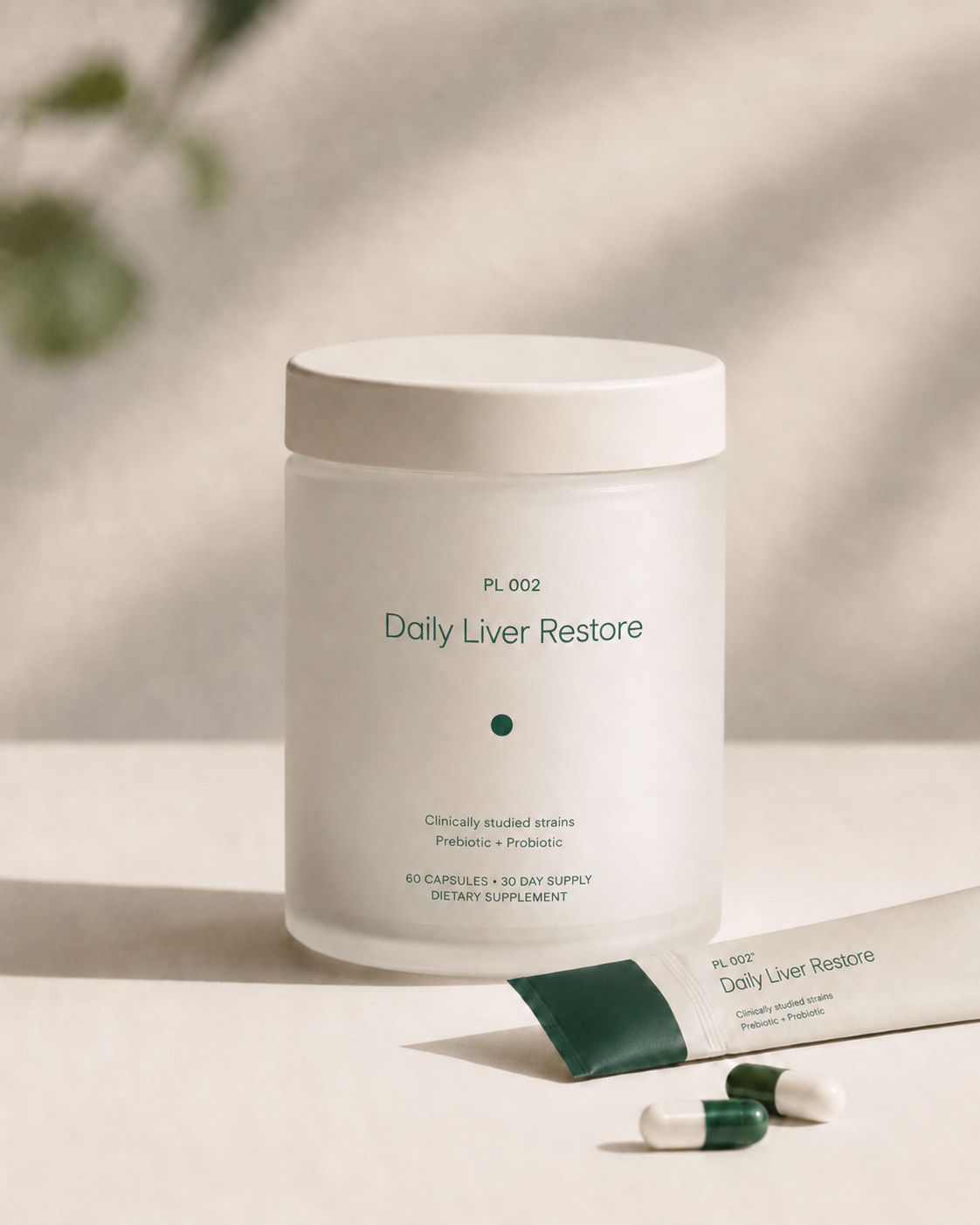
Coming soon Daily Liver Restore — a daily probiotic for early-stage fatty liver

Could this be fatty liver? A 30-second self-check

Early fatty liver is usually silent — most people have no symptoms, and normal liver enzymes don't rule it out. Answer a few questions about known risk factors. This is an educational risk indicator, not a diagnosis.

Are you overweight, or carry weight around the middle?
Do you have type 2 diabetes, prediabetes, or high blood sugar?
High cholesterol, triglycerides, or blood pressure?
Have your liver enzymes (ALT/AST) ever come back even slightly raised?
Has a scan or doctor ever mentioned a "fatty" liver?
Were you told diet and exercise was the only option?
Ongoing bloating, irregularity or other gut symptoms?
Ongoing tiredness or a dull ache under your right ribs?

We'll email a plain-English summary and let you know when our clinical trial and early-access program open. No spam.

Thanks — check your inbox. You're on the early list. ✓

You are not a rare case. You are the majority.

Roughly 3 in 10 adults worldwide have fatty liver, and the great majority are exactly where you are — early, pre-fibrotic, no symptoms.10,11 It is so often missed that in one US primary-care study, only 25% of patients with fat visible on imaging had the diagnosis recorded in their notes.12 Meanwhile every approved medicine is for a later, sicker stage. That gap is deliberate on our part: the early stage is where we work.

~30%
of adults have fatty liver10
25%
of those with visible liver fat had it recorded12
F0–F1
the early stage we target — where no drug is approved13

Two medicines were approved for fatty liver disease in the last two years. Both are for F2–F3 — established inflammation and scarring.13 If you are F0–F1, you are not eligible, and that is the honest reason your doctor had nothing to offer beyond diet and exercise.

Have recent blood results? Check your fibrosis risk

If you have a recent blood test, enter four values for your FIB-4 score — the standard measure clinicians use to gauge liver-scarring risk. A risk estimate only, not a diagnosis.

The science, in plain terms

Most of the harm in early fatty liver doesn't start in the liver. It starts one organ upstream. Your gut lining is a single layer of cells that decides what gets into your bloodstream — and in fatty liver, that layer measurably leaks. Bacterial fragments slip through, travel straight to the liver, and provoke inflammation there.14,16 Our work targets that layer.

🧱

Strengthen the gut barrier

The junctions between your gut cells are looser in fatty liver — and the effect is present at the earliest stage, before any scarring.14 That's the layer we're working to tighten.

🚪

Reduce what reaches the liver

A leakier gut means more bacterial endotoxin arriving at the liver. In animals, binding that endotoxin alone was enough to restore normal liver tissue.16

🎯

Do it with a named molecule

Fermented foods nudge this system too — but nobody can say which of their many ingredients does it. Our aim is a specified ingredient acting on a specified target, so it can actually be measured and dosed.15

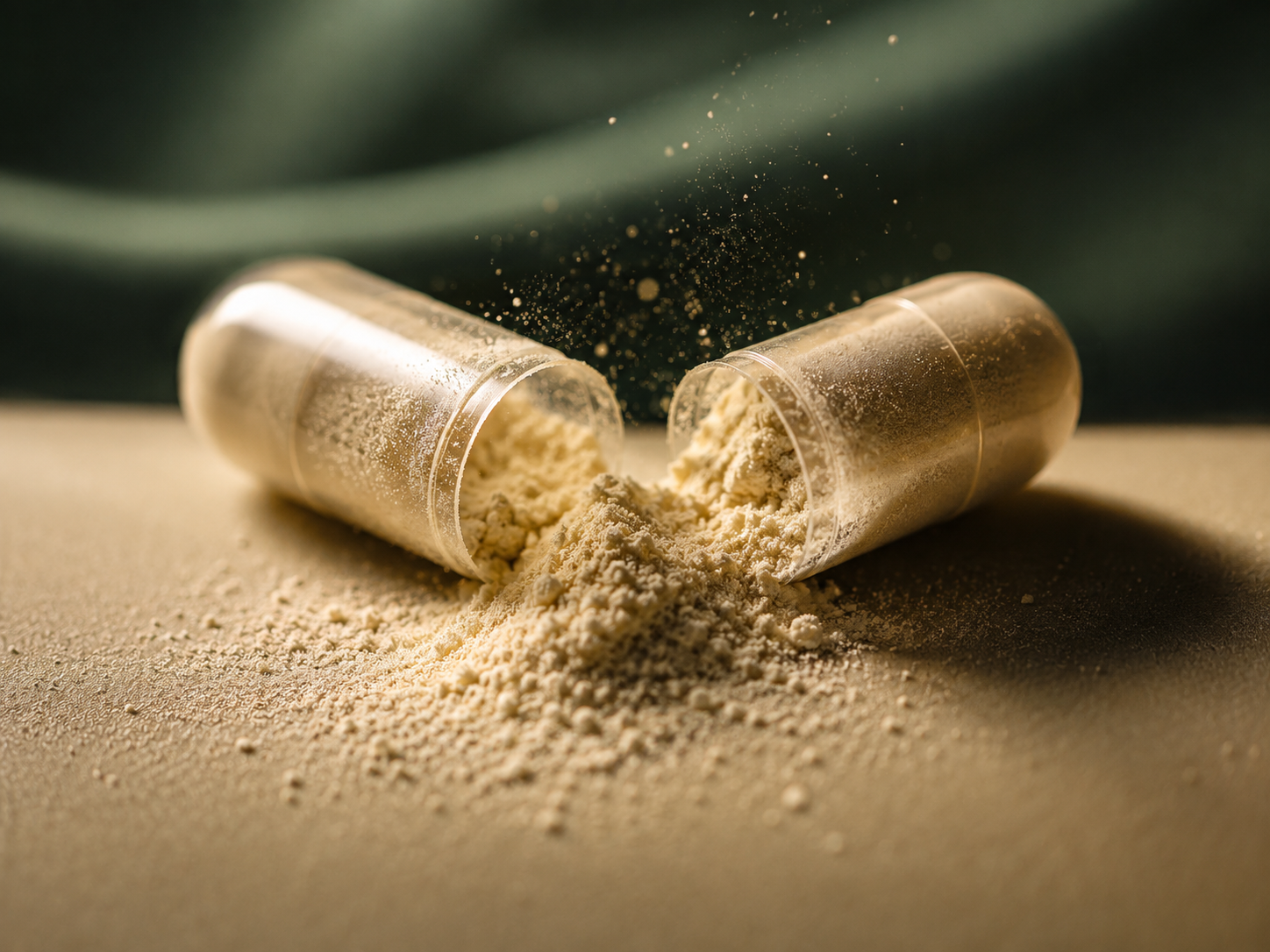
A probiotic capsule opening to reveal its active formulation

Formulation details are proprietary pending peer-reviewed publication. To be plain about the state of the evidence: the gut barrier defect in early fatty liver is well documented in humans, and the causal step — that repairing it improves the liver — is currently shown in animals, not yet in people. Proving that in humans is the point of our programme, not a result we already have.14,16,17

Why the early stage matters most

At the early stage — before significant scarring — the liver has a striking ability to recover. As fibrosis advances, that window narrows.

Stage predicts outcomes

In long-term studies, fibrosis stage — not fat or inflammation — is most closely associated with survival in fatty liver disease.1,2

Fibrosis can regress

Research shows liver fibrosis is dynamic, and regression appears more achievable at earlier stages than once advanced scarring has set in.5,6

Cutting-edge science

Recent discoveries, applied

Built on the last decade's work on the gut–liver axis and engineered probiotics — a frontier only now becoming therapeutically real.7,8,9

Peer-reviewed foundations

The gut-barrier defect we target is documented in human studies, with effect sizes and adjustments we quote openly rather than paraphrase.14,18,19

We publish our negatives

We killed our own first approach when our analysis contradicted it. A company that never reports a null isn't testing anything.

The evidence

Not another supplement. A medical food we're putting through study.

Most liver supplements ask you to trust them. We run the experiments that could prove us wrong.

Our founding team are PhD scientists and medical doctors working in microbiome and gut–liver science — the same fields this product is built on. We set our pass/fail thresholds before we run an experiment, and we report what comes back.

Salpie Nowinski
CEO · PhD
Salpie Nowinski

PhD Computational Biology, King's College London.

Max Mossner
CTO · PhD
Max Mossner

PhD Molecular Biology, Heidelberg University.

Gabriel Nowinski
CMO · MD
Gabriel Nowinski

Medical doctor; ran a Phase III trial.

Our team's published research appears in leading peer-reviewed journals, including Gut, Cancer Discovery and Nature Cancer.

Study 1 · Pharmacokinetics — planned

First, we prove the delivery.

Before claiming any effect, we measure whether the active reaches where it needs to act, and whether the strain survives the trip at all. Most oral ingredients are destroyed or never delivered — and that question is the one supplements skip entirely.

What we measure
Active reaching the gut surface Protected vs free comparison Strain survival through the gut
Study 2 · Effect Study — planned

Then, we test the effect.

Only once delivery is established does a second study measure what it actually does — first whether the gut barrier itself responds, then the liver and metabolic markers that matter to you.

Mechanism signals — is the barrier responding?
Gut permeability Circulating endotoxin (LPS) Strain survival & colonisation
Metabolic & liver markers
Liver fat (MRI) ALT (liver enzymes) Visceral fat & waist Post-meal glucose Insulin resistance

These studies are planned and not yet complete. Nothing here is a claim of clinical benefit — it is a commitment to measuring one, including the possibility that we measure nothing. Formulation details remain proprietary pending peer-reviewed publication.7,14,16

In the lab

We test it in our own lab, before it ever reaches you

Most supplements are never tested — they're formulated, bottled and sold. We do the opposite: every version of our medical food is put through our own lab first, using techniques that didn't exist a decade ago, so we can see whether it's working and whether it's safe.

🔬

We test on human gut tissue

We grow living gut lining from human cells — a technique called organoids — and test our formulation directly on it. Real human tissue, not a chemical stand-in.

🔗

We connect a gut to a liver

Gut–liver "chip" technology links living gut tissue to living liver tissue, so we can watch the gut–liver axis in action and see whether supporting one side benefits the other.

🛡️

Safety comes before effect

We check the gut barrier stays strong and intact throughout. Anything that weakens the lining it's meant to protect doesn't move forward, however promising it looks.

Laboratory testing of the formulation
And we're willing to stop

Every stage has a result that would tell us to abandon it, decided in advance. We've already done that once: our earlier approach was dropped when our own analysis showed it wouldn't work. We'd rather start again than sell you something we'd stopped believing in.

Fatty liver: your questions, answered plainly

Straight answers to what people most often search — grounded in current evidence, not marketing. This is general education, not medical advice; always speak to your doctor about your own situation.

Can early fatty liver be improved?
In its early stage — before significant scarring sets in — the liver has a striking ability to recover, and liver health can often be restored. Research shows the liver can shed substantial stored fat through sustained weight loss, dietary change and more activity. Once fibrosis (scarring) advances, recovery becomes much harder, which is why catching it early matters most. Work with your doctor on a plan suited to you.
Do liver detox products work?
There's no strong evidence that "liver detox" teas, cleanses or supplements clear fat from the liver or repair it — and a healthy liver already detoxifies your body on its own. The changes with real evidence behind them are gradual weight loss, cutting excess sugar and alcohol, and regular exercise. Be cautious of anything promising a quick detox or cure.
What are the symptoms of fatty liver?
Early fatty liver is usually silent — most people have no symptoms at all. When symptoms do appear, they can include ongoing tiredness and a dull ache or discomfort under the right ribs. Because it's so often symptom-free, it's frequently found by chance on a blood test (raised liver enzymes/ALT) or an ultrasound. Our free self-check flags common risk factors so you know whether to get tested.
How do I know if I have fatty liver?
It's usually identified through blood tests (liver enzymes such as ALT), an ultrasound or FibroScan, or a risk score like FIB-4 that combines your blood results and age. Our self-check and FIB-4 calculator give an educational risk estimate — not a diagnosis — to help you decide whether to ask your doctor for testing.
What is the best treatment for fatty liver?
For early fatty liver, lifestyle is the foundation and has the strongest evidence: gradual weight loss (around 7–10% of body weight has the best-documented effect on liver fat), less sugar and alcohol, and regular exercise.3,4 For more advanced disease — established inflammation and scarring, F2–F3 — two prescription medicines were approved recently and are managed by a specialist. At the early stage there is no approved medicine, which is why your doctor's advice stopped at diet and exercise. We're developing a medical food for that gap; it is in research and development and not yet available for sale.
My doctor said just diet and exercise. Is that really all there is?
At the early stage, yes — and your doctor was being straight with you, not dismissive. The approved medicines for fatty liver disease are indicated for later stages with established inflammation or scarring, so they aren't an option at F0–F1. Weight loss and activity genuinely work at this stage, and they remain the first thing to do. The honest gap is that sustained weight loss is hard to maintain, and nothing else is licensed to help. That gap is what we're working on — but we don't have proven human results yet, and you should keep going with the lifestyle plan regardless of anything on this page.
My liver enzymes were only slightly high. Does that matter?
It's worth following up, without panicking. Mildly raised ALT or AST is one of the commonest ways early fatty liver gets picked up — usually incidentally, on bloods taken for something else. Two things are worth knowing. First, the size of the rise doesn't reliably tell you how much fat is there. Second, and more surprising: normal liver enzymes don't rule fatty liver out — you can have fat accumulating with readings in the normal range, which is why imaging rather than bloods is used to measure it. So a small elevation isn't a crisis, and a normal result isn't an all-clear. Ask your doctor whether imaging or a FIB-4 score is appropriate for you.
What does my gut have to do with my liver?
More than most people expect. Your liver gets around 70% of its blood straight from your intestines, so it meets everything your gut lining lets through. In fatty liver, that lining is measurably leakier — and this shows up at the earliest stage, before any scarring, in studies that adjusted for body weight. Bacterial fragments crossing into the bloodstream reach the liver and provoke inflammation there. In mice, disabling a single gut-junction protein caused liver disease with scarring even when the animals stayed the same weight. In people, though, it has not yet been shown that repairing the barrier improves the liver — that is the open question, and it is the one our programme is built to answer. See our gut–liver axis section for the studies and their numbers.
How is this different from a probiotic or yogurt?
Honestly? On present evidence, less than we would like — and we'd rather say so. The best human study to move both a gut-barrier marker and liver markers together used 220g a day of ordinary yogurt. That result supports the underlying biology and simultaneously sets a high bar for us. The difference we're pursuing is specificity: yogurt differs from milk by dozens of constituents, so nobody can say which one worked, which means it can't be dosed, optimised or reliably reproduced. Our aim is a defined ingredient acting on a defined target, which can be measured and improved. That is an argument about being a better-characterised product — not yet a claim that it works better. In the meantime, fermented foods are a reasonable thing to eat.

References

  1. Angulo P, et al. Liver fibrosis, but no other histologic features, is associated with long-term outcomes of patients with NAFLD. Gastroenterology 2015;149:389–397.
  2. Dulai PS, et al. Increased risk of mortality by fibrosis stage in NAFLD: systematic review and meta-analysis. Hepatology 2017;65:1557–1565.
  3. Vilar-Gomez E, et al. Weight loss through lifestyle modification significantly reduces features of nonalcoholic steatohepatitis. Gastroenterology 2015;149:367–378.
  4. Romero-Gómez M, et al. Treatment of NAFLD with diet, physical activity and exercise. J Hepatol 2017;67:829–846.
  5. Trautwein C, et al. Hepatic fibrosis: concept to treatment. J Hepatol 2015;62(1 Suppl):S15–S24.
  6. Friedman SL, et al. Hepatic fibrosis 2022: unmet needs and a blueprint for the future. Hepatology 2022;75:473–488.
  7. Albillos A, de Gottardi A, Rescigno M. The gut–liver axis in liver disease: pathophysiological basis for therapy. J Hepatol 2020;72:558–577.
  8. Aron-Wisnewsky J, et al. Nonalcoholic fatty liver disease: modulating gut microbiota to improve severity? Gastroenterology 2020;158:1881–1898.
  9. Barra M, et al. Engineered probiotics for detection and treatment of inflammatory intestinal diseases. Front Bioeng Biotechnol 2020;8:265.
  10. Younossi ZM, et al. The global epidemiology of NAFLD and NASH: a systematic review and meta-analysis. Hepatology 2023;77:1335–1347. (Global prevalence 30.05%, 95% CI 27.88–32.32.)
  11. Riazi K, et al. The prevalence and incidence of NAFLD worldwide: a systematic review and meta-analysis. Lancet Gastroenterol Hepatol 2022;7:851–861.
  12. Schreiner AD, et al. NAFLD underdiagnosis in primary care. J Gen Intern Med 2022;37:1425–1432. (Only 25% of patients with radiographic steatosis had a recorded diagnosis.)
  13. Approved therapies are indicated for F2–F3 MASH: resmetirom (Rezdiffra), FDA approval 14 Mar 2024, non-cirrhotic MASH with moderate-to-advanced fibrosis; semaglutide, FDA approval Aug 2025 (ESSENCE, NEJM 2025). Neither is indicated at F0–F1.
  14. Mouries J / De Munck TJI, et al. Intestinal permeability and its endotoxin proxy in NAFLD: systematic review and meta-analysis, 43 studies. PMID 36470528. (Simple steatosis vs liver-healthy controls SMD 0.86, 95% CI 0.62–1.11; increases retained after adjustment for BMI, metabolic condition or liver enzymes.)
  15. Chen Y, et al. Effect of yogurt (220 g/day) vs milk on hepatic and metabolic outcomes in women with NAFLD and metabolic syndrome, n=100, 24 weeks. PMID 31136662. (LPS −0.31 EU/mL; intrahepatic lipid −3.44%; ALT −4.65 U/L. Note: yogurt differs from milk by many constituents; the active is not attributed.)
  16. Rahman K, et al. Loss of junctional adhesion molecule A promotes severe steatohepatitis in mice on a diet high in saturated fat, fructose and cholesterol. Gastroenterology 2016;151:733–746. PMID 27342212. (Knockouts developed fibrosis at the same body weight and glucose homeostasis as controls; rescued independently by oral antibiotics or by sevelamer endotoxin sequestration. Animal model.)
  17. Albillos A, de Gottardi A, Rescigno M. The gut–liver axis in liver disease: pathophysiological basis for therapy. J Hepatol 2020;72:558–577.
  18. Tilg H, et al. Intestinal permeability in metabolic syndrome without liver disease — no increase vs controls. PMID 35629938. (Negative control: the permeability defect tracks the liver lesion, not metabolic syndrome.)
  19. Guercio Nuzio S, et al. Multiple gut–liver axis abnormalities in children with obesity with and without hepatic involvement. PMID 27350543. (Permeability graded by degree of liver involvement, p<0.05; correlated with endotoxaemia r=0.48, p=0.015.)
  20. Internal census of ClinicalTrials.gov (54,400-trial export, analysed 2026): ~61 registered trials pair a live bacterial intervention (probiotic, synbiotic or FMT) with a liver endpoint; none uses an engineered strain. Company analysis, not a peer-reviewed publication.

Where the evidence is animal-only, in vitro, or our own unpublished analysis, we have labelled it as such in the text above rather than in the footnote alone. Effect sizes are quoted as reported by the original authors.

Daily Liver Restore

A daily medical food in development for the earliest stage of fatty liver

$49.50/month (est.)

Indicative early-access pricing · no payment taken today

  • Designed for the early, pre-fibrotic stage (F0–F1)
  • Works on the gut–liver axis, not the liver from a distance
  • A medical food, taken alongside your doctor's advice
  • Priority place in our study & early-access programme
  • We'll email you our results — including the negative ones

Reserve your place — we'll be in touch as the trial and launch approach

We'll email you about the trial and early access. No spam.

You're on the list ✓

We'll be in touch as our clinical trial and early-access program open. Thank you.

✓ Built for the early stage, not the late one ✓ Human-evidence-led, animal steps labelled as such ✓ We report our null results
Why the gut

Much of the damage to your liver arrives from your gut

Your liver receives about 70% of its blood supply directly from your intestines, through the portal vein. It is the first organ to meet everything your gut lets through. That direct line is the gut–liver axis — and in early fatty liver, it is carrying the wrong cargo.7,8

The barrier leaks, and it leaks early. Pooling 43 studies, gut permeability and its endotoxin marker are raised in simple fatty liver — no inflammation, no scarring — compared with people with healthy livers.14 This is not a late-stage phenomenon. It is there at the stage you're at.
It isn't just the extra weight. The obvious objection is that heavier people have both leakier guts and more liver fat. But the increase held up after adjusting for BMI and metabolic factors14 — and in the cleanest test, people with metabolic syndrome but no liver disease showed no permeability defect at all.18 The leak tracks the liver, not the waistline.
It scales with how involved the liver is. In children, permeability rose in steps — healthy weight, then obesity, then obesity with fatty liver — and it was highest in those whose liver enzymes had started to climb. Raised permeability also predicted going on to develop fatty liver.19
In animals, the barrier alone is enough to cause it. Mice missing one gut-junction protein developed full-blown liver disease with scarring on a diet their normal littermates barely reacted to — at the same body weight and the same blood sugar. So it wasn't the fat or the glucose. And the liver damage was reversed two separate ways: clearing the bacteria, or simply mopping up their endotoxin.16
Nobody is building for this yet. Across a census of clinical trials pairing a live bacterial product with a liver endpoint, roughly 61 exist — and not one uses an engineered strain.20 Barrier repair as a deliberate treatment target in fatty liver is almost untested. That's the gap we're working in, and we're aware it cuts both ways: it means no one has proven it either.
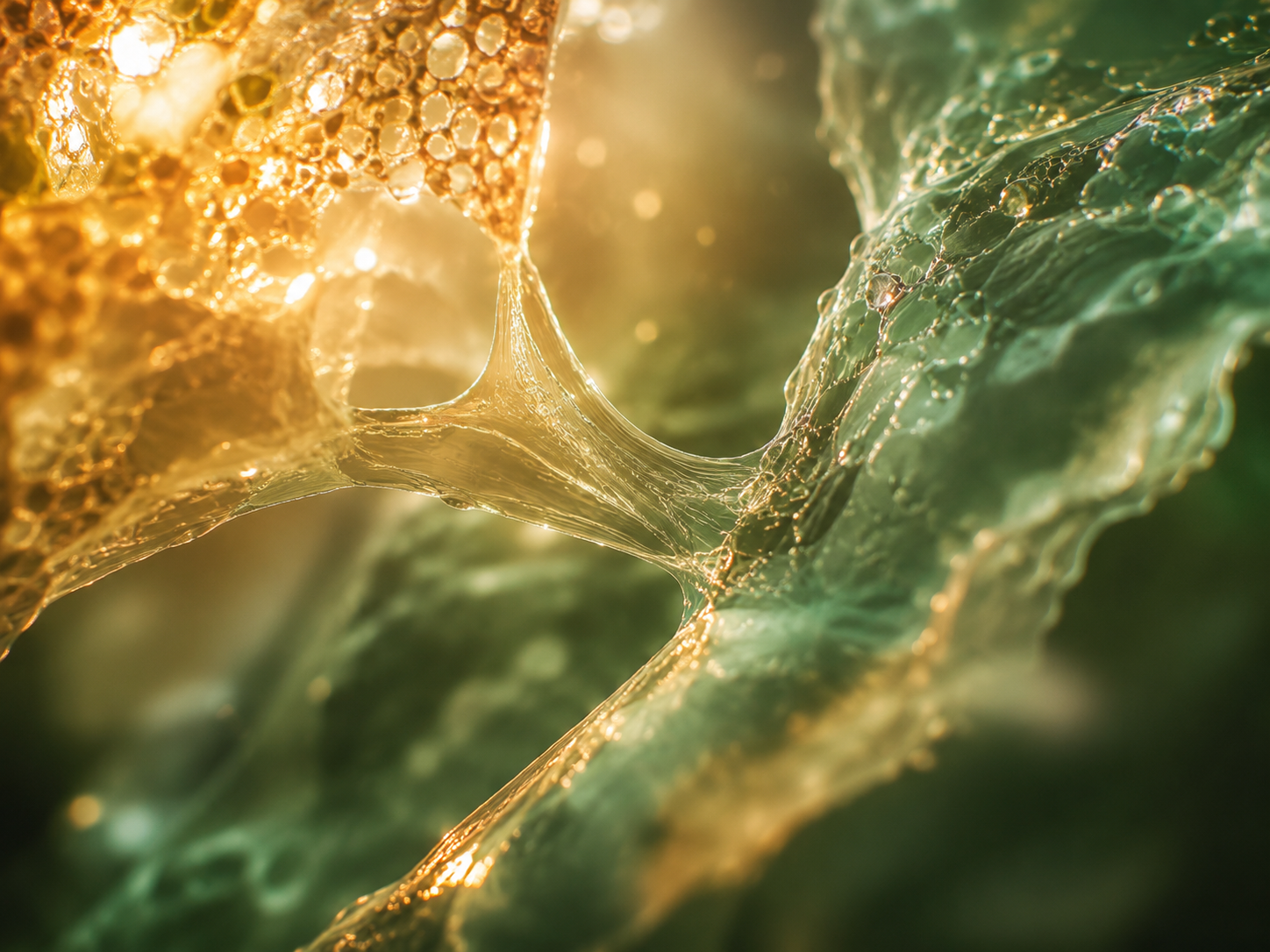
Macro view of the gut–liver axis — gut and liver tissue in constant exchange
The gut–liver axis: ~70% of the liver's blood arrives from the intestine, carrying whatever the gut barrier lets through.
What we can't tell you yet

Strengthening the gut barrier is the best-supported target we've found, and it is also the least-tested intervention — those two facts belong together. The human evidence shows the leak is real and early. It does not yet show that closing it reverses liver scarring in people; no treatment of any kind has shown that. Two human studies have moved a gut-barrier marker and liver markers together — one of them was 220g a day of ordinary yogurt.15 We take that seriously rather than hiding it: it tells us the biology is real, and it sets the bar we have to clear.
Our mission

Pioneering next-generation probiotics for human and planetary health